


Chessfire: Shotgun Chess
4.5161.00 Reviews
App Specs
- Version
- 1.21.1
- Updated On
- License
- Free
- Downloads
- 100,000+
- Developer
- Lumid Labs UG (haftungsbeschränkt)
- Categories
- Strategy
- Platform
- Android
Screenshots
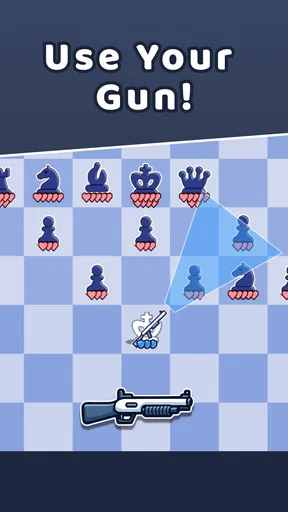
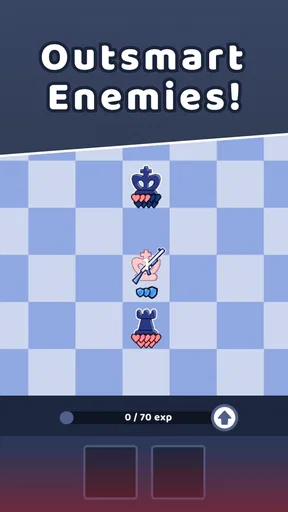
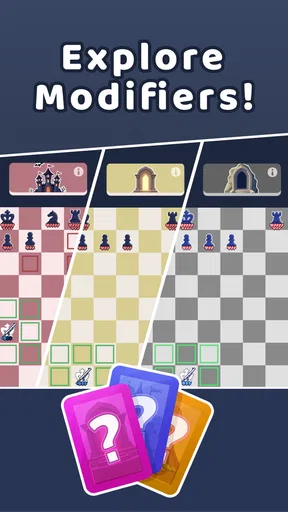
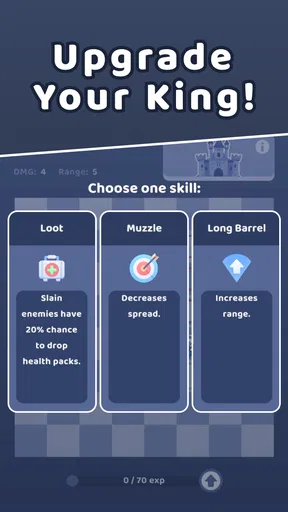
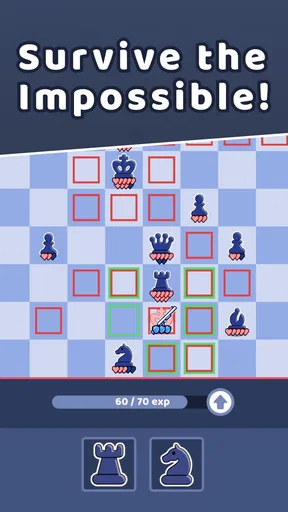
 Analysis by AppCompare
I went into Chessfire: Shotgun Chess expecting a familiar board-game idea with a louder, more aggressive presentation. What I found is a strategy game built around the recognizable logic of chess, but framed as something much more immediate than a traditional match. That difference matters: this is the sort of game I can imagine opening for a short burst when I want to think, rather than settling in for a long, formal chess session.
The basic appeal is easy to understand. Chessfire turns the patience of chess into a more action-oriented challenge, while still asking me to look ahead and make decisions carefully. It is free to start, aimed at Everyone, and developed by Lumid Labs UG (haftungsbeschränkt). The store summary, “Blast Your Way to Victory!”, captures the game’s energetic attitude, while its short description, “Chessfire,” keeps the concept deliberately compact.
My overall impression is positive, especially for players who like strategy but do not always want the quiet, serious atmosphere of a standard chess app. At the same time, this is not the best choice for someone seeking a complete replacement for a conventional chess platform. Its value comes from the twist, the quicker decision-making, and the willingness to make the board feel less restrained.
How the game feels when you start playing
The most important adjustment is mental. In ordinary chess, I tend to think in terms of long plans, positional improvement, and careful exchanges. Here, the presentation encourages a more direct question: what can I do immediately, and what will that move expose? That shift makes each decision feel more urgent, even when the underlying strategy still depends on reading the board.
I found that the game works best when I stop trying to approach it exactly like a tournament chess app. Treating every position as a pure calculation exercise can make the experience feel unnecessarily rigid. Instead, I look for tactical opportunities, likely responses, and the safest way to create pressure. The result is a style of play that rewards awareness without demanding the same solemn concentration as a classical match.
That makes it approachable for people who know the basic movement of chess pieces but are not deeply trained players. A complete beginner may still need time to understand why a seemingly powerful move creates a weakness, but the faster framing gives them a reason to keep experimenting. More experienced chess players may enjoy the novelty, although they should expect their usual habits to be challenged rather than simply rewarded.
One useful way to play is to treat the opening moments as reconnaissance. Rather than committing to the first attractive attack, I spend a little time checking which pieces are actually protected and where the opponent’s pressure could develop. This is a small habit, but it prevents the most common mistake in an aggressive chess variant: confusing a dramatic move with a safe one.
Worth Reading Before You Choose

EA SPORTS FC Mobile 26 Is a Bigger Football Game, but It Takes Time

Flipboard Shows What News Apps Must Do Beyond the Feed

Switching to Android Auto Means Rethinking Your Driving Routine

Google Calendar Makes a Crowded Week Easier to Manage

Ludo King Makes the Most of the Minutes Between Plans

Baby Panda World Brings Quick Play to Modern Phones, but Its Game Library Feels Busy
Speed without losing the strategy
Chessfire feels designed for shorter attention windows than a traditional chess session. I can imagine playing it while waiting for an appointment, during a break, or at the end of the day when I want something interactive but do not have the energy for a long campaign. The game’s appeal is not simply that it moves quickly; it is that the decisions arrive with enough tension to make a short session feel worthwhile.
That said, perceived speed depends on how I approach the board. Rushing every turn does not automatically make the game better. The strongest rhythm is a quick scan, a deliberate choice, and then an immediate check of the consequences. If I play too fast, I lose the strategic quality that separates this from a reflex game. If I overthink every possibility, I lose the lively character that makes the format attractive.
For everyday use, I would recommend setting a simple personal rule: before making an attacking move, identify the opponent’s most obvious reply. This keeps the pace brisk while adding a layer of discipline. It is also a good way for a chess newcomer to learn tactical thinking without turning the game into a lesson.
The game’s free entry point helps with this experimentation. I can try different approaches without first deciding whether I want to make a purchase. In-app items range from $1.99 to $99.99 each, so I would personally avoid treating purchases as part of the basic learning process. The free experience should be the place to decide whether the game’s style suits me before spending anything.
What happens during heavier play
The moments that feel busiest are not necessarily the ones with the most pieces on the board. The real pressure comes when several threats overlap and I need to compare an attack, a defense, and a possible counterattack in a short window. That is where the game’s concept earns its place. It turns a familiar board into a more demanding prioritization exercise.
In those situations, I find it helpful to separate the board into three questions. Which piece is in immediate danger? Which move creates the strongest threat? Which square becomes vulnerable after I act? This approach is more useful than focusing only on the most spectacular option. A flashy move can be tempting, but the better decision is often the one that limits the opponent’s choices.
A second practical insight is to watch for momentum traps. Once I begin attacking, it is easy to keep pushing simply because the previous move worked. Chessfire is more enjoyable when I resist that instinct. After gaining ground, I pause briefly and ask whether the position actually improved or whether I merely moved the danger somewhere else. That habit makes the game feel more strategic and reduces careless losses.
For players coming from standard chess, the transition may be uncomfortable at first. Classical habits such as slow development and long-term material planning may still help, but they cannot be applied mechanically. I get better results when I retain the fundamentals—protect important pieces, control useful spaces, and anticipate replies—while accepting that the game wants more immediate decisions.
For players who dislike mental pressure, that same intensity may be the main drawback. The game is not a relaxing puzzle in the traditional sense. Even when a session is short, the need to react to changing threats can be tiring. If I want a calm, methodical experience with plenty of time to study a position, a conventional chess app is likely a better fit.
Stability and the practical side of reliability
My view of reliability here is mostly about whether the game supports a clean, repeatable session. A strategy game loses much of its appeal if interruptions make it difficult to return to the position or if the experience feels unpredictable. Chessfire is easiest to enjoy when I approach it as a focused session rather than something I leave running while switching constantly between other apps.
I also prefer to begin a longer sequence of matches only after closing unnecessary background activity. That is not a special requirement unique to this game; it is simply sensible for any interactive title that needs consistent input and visual response. On a less capable phone, reducing distractions can make the whole experience feel more dependable, especially when the device is already busy.
The current version is 1.21.1, which suggests that the game has already moved beyond its earliest release state. It launched on September 27, 2024, and its presence on the store has grown to more than 100K installs. Those details do not tell me everything about long-term support, but they do make the game feel more established than an untouched first release.
Its average rating is 4.5 from around 1.7K ratings, with 158 written reviews. I treat that as encouraging rather than conclusive. A rating can tell me that many players are satisfied, but it cannot replace trying the game myself, particularly because the unusual chess format will appeal strongly to some people and leave others cold.
One reliability habit I recommend is finishing a natural stopping point before leaving the game. If I am interrupted in the middle of a tense decision, I would rather pause after reviewing the board than exit impulsively. This is less about the app itself and more about preserving my own understanding of the position. Strategy games are easier to resume when I leave myself a clear mental snapshot.
Device expectations and everyday limitations
Chessfire supports Android 7.0 and later, so it is not restricted to only the newest phones. That broad compatibility is useful for players who keep an older device as a spare or who do not upgrade frequently. Still, operating-system support is only one part of the experience. Screen size, available memory, battery condition, and the number of other apps running can all influence how comfortable a strategy game feels.
On a smaller display, board visibility becomes especially important. I prefer holding the phone in a way that lets me inspect the full position without repeatedly shifting my attention. If the interface feels crowded on an older or compact handset, the problem is not necessarily game speed; it may simply be that strategic information is harder to read at a glance. Players with limited vision or a preference for large boards should keep that in mind before committing to long sessions.
Battery use is another practical consideration. I would not assume that a chess-themed game is automatically light on resources just because the board itself is simple. The presentation and active interaction can still make a difference. My advice is straightforward: use shorter sessions when the phone is low on charge, and avoid beginning a serious match when the device is already warm or under heavy load.
Storage and data habits also matter in ordinary use. Since the game is free to install, it is easy to try, but I would still review the device’s available space before downloading any game if storage is nearly full. A crowded phone can create problems that feel like app instability even when the real issue is the device itself.
The Everyone age rating makes the game broadly suitable from a content standpoint. That does not mean every child will enjoy it. The strategic pressure and fast choices may be better suited to players who already understand basic chess ideas or who enjoy learning through trial and error. For younger players, I would treat it as a game to explore together rather than assume it will teach chess automatically.
Where it beats ordinary chess apps
The clearest advantage over a standard chess app is personality. Traditional chess platforms are usually strongest when I want formal rules, deep analysis, ranked competition, or a serious training routine. Chessfire is more appealing when I want the familiar shape of chess with a more energetic mood and a stronger emphasis on immediate tactical choices.
It also has a useful middle ground between a pure puzzle game and a conventional match. I still need to think about positioning and consequences, but I am not approaching the board only as an academic exercise. That makes it a good option for a player who finds ordinary chess apps too slow or intimidating, yet still wants more substance than a simple arcade title.
The trade-off is depth of purpose. If my goal is to improve classical opening knowledge, study endgames, analyze games in detail, or measure myself against a structured competitive ladder, I would choose a dedicated chess platform instead. Those tools are built around long-term improvement in a way this more explosive interpretation may not be.
I would also skip it if I strongly dislike variations from established chess. The game’s identity depends on doing something different with the familiar foundation. That is exactly why I find it interesting, but it is also why a purist may feel that the experience is moving away from what makes chess satisfying.
Who will get the most from it
I think the best audience is a casual strategy player who already knows how chess pieces move and wants a faster, more dramatic way to use that knowledge. It is also a reasonable choice for someone trying to return to chess after a long break. The game gives me a reason to think about threats and protection again without demanding that I immediately study dense theory.
It suits short, repeatable sessions particularly well. For example, if I have ten minutes before leaving home, I can use one session to focus on defensive awareness rather than trying to complete a long traditional match. On another day, I might play more aggressively and see whether I can recognize when an attack has stopped being productive. This makes the game useful as a small daily mental exercise, provided I enjoy its pace.
I would be more cautious recommending it to a serious tournament player, a player who wants a quiet offline pastime, or someone who expects every purchase to be optional and irrelevant to the experience. The in-app purchase range means I would pay attention to the store flow and make sure I am comfortable with the way optional items are presented before allowing a child to play unsupervised.
Another group that may want to skip it is anyone looking for a completely passive way to relax. Chessfire asks me to stay engaged. Even when the session is brief, I need to watch the board, recognize danger, and accept that a careless decision can undo a promising position. That is satisfying when I want stimulation, but not when I am looking for background entertainment.
My performance verdict after using it
Chessfire: Shotgun Chess succeeds because it has a clear reason to exist. It does not merely place a normal chessboard on a phone and expect the familiar formula to carry everything. Instead, it pushes chess toward a quicker, more forceful style that gives casual players an approachable entry point and gives experienced players something different to test.
From a practical performance perspective, I would describe it as best suited to focused play on a reasonably maintained device. I would not judge it by the standards of a full competitive chess suite, because its purpose is different. Its strength is the compact strategic encounter, not the promise of replacing every chess tool I already use.
The free price makes trying it easy, while the Everyone rating and Android 7.0 minimum make it accessible across a wide range of players and devices. The optional purchases deserve sensible caution, particularly at the upper end of the listed range, but they do not change my basic recommendation: play enough of the free experience to decide whether the format genuinely clicks with you.
My final advice is to approach it with an open mind and a defensive habit. Do not chase every attack, do not assume a dramatic move is automatically a good one, and do not compare every moment with classical chess. If you want a lively strategy game that borrows chess thinking without keeping the entire traditional atmosphere, I think it is worth trying. If you want deep analysis, formal competition, or a slow study environment, the usual chess alternatives will serve you better.
For me, Chessfire: Shotgun Chess is most successful as a quick tactical diversion with enough strategic weight to reward attention. It is not a universal chess replacement, and it does not need to be. Its best quality is that it makes me look at familiar pieces differently, then asks me to make a decision before the moment passes.
Pros
- Fast matches make it easy to play during short breaks.
- Shotgun mechanics add fresh tactical depth to classic chess.
- Simple controls are accessible for beginners and experienced players.
- Quick decision-making keeps games intense and engaging.
- Compact design works well for mobile screens and touch controls.
Cons
- The unusual rules may confuse traditional chess players at first.
- Limited strategic depth compared with standard chess openings.
- Fast gameplay can feel stressful for players who prefer slower matches.
- The player base may be smaller than that of mainstream chess apps.
- Shotgun effects may reduce the appeal for purist chess fans.
FAQs for Chessfire: Shotgun Chess
What is Chessfire: Shotgun Chess, and how is it different from regular chess?
Chessfire: Shotgun Chess is a chess variant that adds a dramatic capture mechanic to the traditional game. Instead of removing only the selected piece, a capture can affect nearby pieces within the blast area, changing the value of trades and making familiar openings much less predictable. It still requires normal chess skills, but players must also consider positioning, splash damage, and the danger of grouping pieces too closely.
Is Chessfire: Shotgun Chess suitable for beginners?
The game can be enjoyed by beginners, especially if they already understand basic chess movement and checkmate concepts, but it may take time to adjust to the explosive rules. Standard tactics do not always work as expected because a single capture can alter several squares at once. New players should begin with casual matches or practice games before attempting competitive play.
Can I play Chessfire: Shotgun Chess offline or against the computer?
Availability of offline play and artificial-intelligence opponents may depend on the version installed and the platform you use. If these modes are included, they are useful for learning the blast rules, testing opening ideas, and practicing without waiting for another player. Check the app’s current store description before downloading, since features and supported game modes can change through updates.
Does Chessfire: Shotgun Chess support online multiplayer?
Chessfire: Shotgun Chess is designed around fast, unpredictable matches, making multiplayer an important part of its appeal. Depending on the current release, you may be able to challenge other players through online matchmaking, private games, or local play. Before starting a match, review the connection requirements and available modes, because online features can vary by region, device, and app update.
Is Chessfire: Shotgun Chess free to download, and does it contain purchases or advertisements?
The download price, advertising model, and optional purchases can differ between the Android and iOS versions. Some editions may be free with advertisements, while others may offer paid upgrades, cosmetic content, or features that require payment. We recommend checking the official store listing before installation and reviewing the permissions, in-app purchase details, and subscription information shown for your device.


